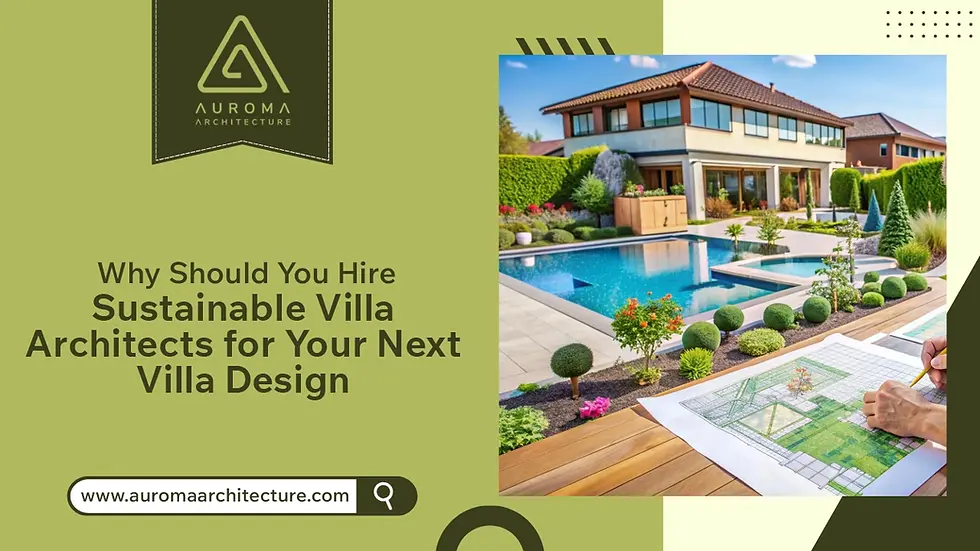
.webp)


Designing Eco Friendly Buildings For A Greener Future
- Trupti Doshi

- Jul 14, 2025
- 4 min read
Updated: Aug 4, 2025
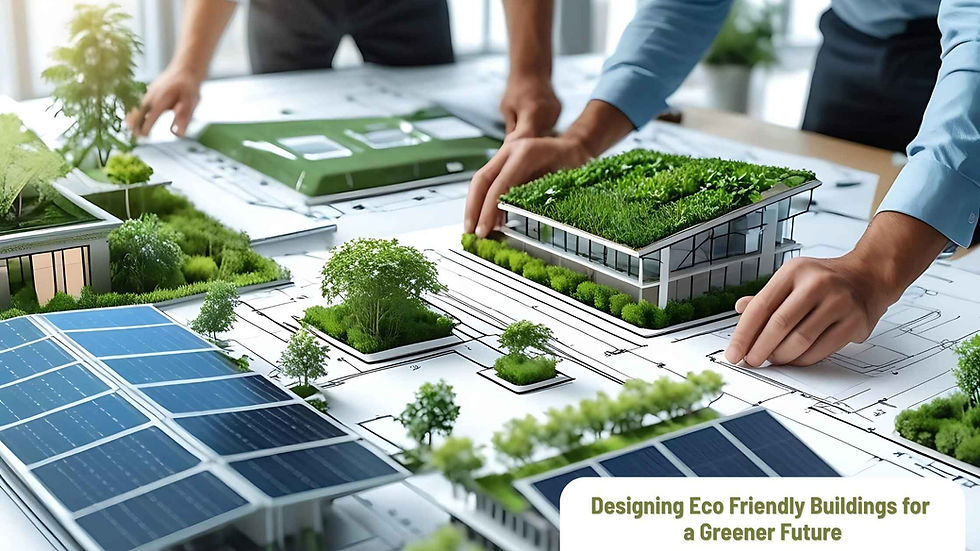
According to the United Nations Environment Programme, buildings contribute nearly 39% of global carbon emissions, with construction materials and operations accounting for the bulk. It’s a staggering number that points to an urgent need for change. And change is exactly what Architect Trupti Doshi, the visionary behind Auroma Architecture, is driving with passion and purpose from her studio in Pondicherry, India. Her answer? eco friendly building.
When you collaborate with Architect Trupti Doshi, you’re not just designing a structure — you’re investing in a future where the Earth breathes easier, communities thrive, and architecture becomes a healing force. Trupti’s approach to eco friendly building construction is rooted in natural intelligence, appropriate technology, and deep human-centered design.
The Why: Why Eco Friendly Building Matters
Every brick we lay, every material we source, every watt of energy consumed in construction has ecological consequences. Traditional construction methods rely heavily on materials like cement and steel, which are among the top contributors to greenhouse gas emissions. In contrast, eco friendly building techniques embrace alternatives such as rammed earth, lime plaster, reclaimed wood, and fly ash bricks — all of which feature prominently in Architect Trupti Doshi’s work.
Her celebrated project, the Sharanam Rural Development Centre, is a shining example. Constructed from unfired earth from the site itself and using less than 10% of the cement that a conventional project would require, Sharanam has been recognized by the United Nations as a model for environmentally friendly buildings.
Design Thinking Rooted In Nature
“Can buildings be like people?” Trupti asks in her TEDx talk — a question that encapsulates her philosophy of living, breathing architecture. For her, a eco friendly building design is one that learns from nature and interacts with its surroundings rather than resisting them.
Take the Auroma French Villaments, for instance. Designed to emulate the harmony of a mother, this community integrates elements like passive cooling, natural lighting, solar energy, rainwater harvesting, composting, and even farming. It’s not just about energy savings — it’s about creating environmentally friendly home design that feeds the spirit.
The homes here don’t merely shelter. They respond to climate, listen to wind, whisper with the sun, and breathe with the earth. Every wall, window, and water line is tuned to the rhythms of nature.
Construction That Empowers
In many of Trupti’s projects, including Sharanam and the School for Integral Education in Indore, construction has been a community-building activity. More than 450 unskilled villagers were trained in over 20 sustainable building techniques — transforming not just the landscape, but lives. Eco friendly building construction under Architect Trupti Doshi is an act of empowerment.
Materials like lime instead of cement, rammed earth instead of fired bricks, and local stone instead of imported tiles are not only ecologically sound but also boost the regional economy by employing local artisans.
Holistic Comfort: Light, Air, Acoustics
Another distinctive hallmark of Architect Trupti Doshi’s approach to eco friendly home designs is how comfort is woven naturally into the space. Artificial lighting during the day becomes redundant when windows are placed based on sun-path analysis. Thermal comfort doesn’t need energy-hungry ACs when water bodies, lime plasters, and shaded verandahs regulate indoor temperature.
Even acoustics are handled thoughtfully. Sharanam’s vaulted hall doesn’t use microphones. Instead, the very roof and unfired earthen bricks reflect and absorb sound in a way that makes music and speech naturally audible — earning praise from international violinists and acousticians.
Every Project A Story
At Auroma Architecture, no two buildings are the same — because no two people or sites are the same. Projects such as:
Gratitude EcoVilla – Called the “House of Tomorrow,” it demonstrates regenerative design principles with nearly zero net impact.
Jagriti Enterprise Centre – Designed like the inner journey of an entrepreneur, this incubation center catalyzes rural innovation through a building that reflects its mission.
Delhi Public School, Burdwan – Classrooms designed to maximize daylight and thermal comfort, inspiring students through environmentally friendly buildings.
These are not mere structures. They’re living ecosystems.
The Future Is Now
Climate change isn’t tomorrow’s problem. It’s now. And eco friendly building is no longer a luxury — it’s a necessity. Whether you’re planning your home, an institution, or a commercial space, the way it is designed will impact generations to come.
Architect Trupti Doshi believes that eco friendly building design must go beyond checklists and certifications. It must embrace beauty, intelligence, and healing. Her work integrates poetic sensibility with scientific precision, offering clients both artistic elegance and measurable sustainability.
Ready To Build A Better Tomorrow?
If this resonates with you — if you believe that your home, school, or office should nourish not just your needs but the Earth’s as well — now is the time. You can book a consultation with Architect Trupti Doshi by filling out the form at https://www.auromaarchitecture.com/contact-us. Her team at Auroma Architecture will schedule your appointment and guide you through this transformational journey.
Don’t wait to be a part of the change. Because the longer we delay, the more we lose. Let’s create environmentally friendly buildings that our children will thank us for — buildings that breathe, sing, and stand in harmony with nature.
"This world was not built with random bricks of Chance... A conscious power has drawn the plan of life..." — Sri Aurobindo