.webp)


5 Key Factors to Consider When Planning and Designing a Resort

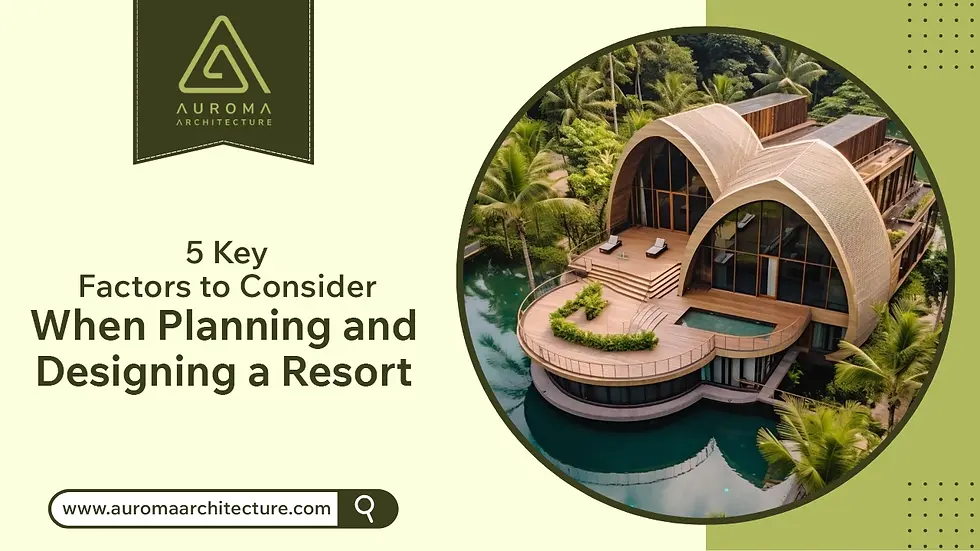
Designing a resort is not just about constructing buildings. It’s about creating a space where people can rest, reconnect with nature, and feel renewed. Great resort design weaves comfort, culture, and sustainability into a seamless experience that feels effortless for the guest but is highly intentional behind the scenes.
From serene eco-retreats to boutique coastal resorts, every design choice plays a role in shaping a story.
In this guide, we explore the most important factors for resort planning and design, along with cost insights, project examples, and common mistakes to avoid.
Key Takeaways
Resort architecture is more than building design it's about crafting immersive guest experiences that are intuitive, restful, and rooted in nature.
Smart site selection and environmental responsiveness lay the foundation for a sustainable and cost-effective resort.
Architectural Master planning and functional zoning are key to balancing guest comfort with operational flow.
Aesthetic choices should reflect local materials, cultural identity, and long-term durability, not just trends.
Thoughtful resort landscape design enhances biodiversity, cooling, and emotional well-being.
Mistakes like ignoring topography, overdesigning, or skipping local permissions can lead to major delays and costs.
Table of Contents
Why Resort Planning Needs a Thoughtful Architectural Design Approach?
A well-designed resort doesn’t just look good, it feels good. The design should respond to the land, respect its context, and guide guests through a series of memorable experiences. That’s why working with an experienced hospitality architecture firm makes a big difference.
It’s not only about the layout of rooms and amenities. It’s about understanding how people move, rest, eat, and explore. Good resort architecture helps everything flow naturally while maintaining operational efficiency. There are 5 key factors that need to be consider before designing.
Factor 1: Site Selection and Environmental Context
The land speaks first. A great design begins by listening.
Understanding the terrain, wind direction, sun movement, vegetation, and soil quality will shape the resort's planning. Resort architects use this information to align buildings with nature. Instead of removing trees, we build around them. Instead of flattening land, we use slopes for privacy, views, or water movement.
When the site is respected, the resort feels grounded, comfortable, and uniquely placed.
Factor 2: Master Planning and Space Zoning
Resorts are like small villages. They need clearly defined zones for guests, staff, service areas, relaxation spaces, and shared amenities.
Thoughtful space zoning allows for:
Easy wayfinding
Natural transitions from private to social spaces
Minimal interference between guests and service movement
When zoning is well-executed, the entire resort feels balanced and intuitive, offering both privacy and community in just the right measure.
Factor 3: Guest Experience and Functional Flow
Resort design is ultimately about how it feels to be there. Every guest touchpoint -from arrival to dining, to rest—should be welcoming and smooth. A well-designed resort considers functional flow at every level. For guests, this means comfortable paths, shaded seating, natural ventilation, and views that surprise and soothe. For staff, it means efficient access, easy maintenance routes, and discreet service areas. When the flow works, everyone feels at ease.
Factor 4: Aesthetic Vision – Interior and Exterior Design
A resort’s visual language should reflect the landscape and culture around it.
Natural materials like bamboo, lime plaster, clay tiles, stone, and reclaimed wood don’t just support sustainability. They also create spaces that feel warm, timeless, and connected to place.
Good resort architecture design uses beauty with intention. The goal isn’t to impress from a distance, but to invite deeper connection through thoughtful design choices.
Factor 5: Landscape, Sustainability, and Local Integration
Resort landscape design is about more than plants and lawns. It shapes how guests interact with the outdoors. It also plays a key role in managing water, cooling, and ecology.
Sustainable landscapes:
Use native plants to reduce water needs
Create walking trails that encourage exploration
Support local biodiversity
True sustainable resort development also means building with local knowledge. Hiring regional artisans, sourcing local materials, and using traditional building wisdom keeps the project rooted in its environment and culture.
Bonus Consideration: Compliance, Permissions, and Project Phasing
Before design begins, it’s important to check for regulatory requirements. Depending on the location, you may need environmental clearances, CRZ approvals, or forest department permissions.
Also consider breaking your project into phases. Building the core infrastructure first allows you to grow in a way that’s financially manageable and adaptive to feedback.
Interesting reads: The Complete Guide to Sustainable Hotel Design Architecture
Common Mistakes to Avoid in Resort Planning & Design

Even the most exciting resort ideas can go off track without careful planning. Here are some common missteps that can quietly derail timelines, increase costs, or compromise the guest experience and how to avoid them from the start.
1. Prioritizing looks over comfort
Instagram-friendly doesn’t always mean guest-friendly. Comfort should come first.
2. Ignoring the natural topography
Not planning for drainage, slope, or sun path can lead to long-term issues.
3. Overlooking staff logistics
Service routes should be functional and discreet. If they’re poorly planned, it affects the guest experience.
4. Relying too much on imported materials
These may look luxurious, but often don’t suit the climate or budget. Local materials age better and feel more authentic.
5. Skipping environmental studies
Without these, your project risks delays, penalties, and higher costs. Start smart with proper research.
How Much Does it Cost to Build a Resort in India?

Resort construction cost depends on scale, location, and design complexity. Here’s a general guide:
Nature Retreats
Eco-stays with minimal built-up area, using natural materials, low-energy systems, and compact layouts.
Cost per sq ft : ₹2,500 – ₹3,500/sq ft
Boutique Resorts
A balance of comfort and sustainability, often featuring themed cottages, curated landscape zones, and higher-quality finishes.
Cost per sq ft: ₹4,000 – ₹6,000/sq ft
Eco-Luxury Resorts
Top-tier designs with advanced green technologies, solar systems, rainwater harvesting, and bespoke interiors. These often include private pools, spas, and immersive experiences.
Cost per sq ft: ₹6,500 – ₹9,000/sq ft+
Additional Influences on Cost:
Terrain complexity and site access
Quality of landscape and lighting systems
Local vs. imported materials
Permissions and environmental compliance
Energy-saving and water systems
While upfront investment may vary, sustainable resort planning reduces long-term energy bills, boosts occupancy, and improves guest loyalty, making it a smart financial and environmental choice.
Investing in sustainable resort planning reduces energy use, increases guest satisfaction, and lowers long-term maintenance costs.
Interesting reads: How Much Does It Cost to Build a 5-Star Luxury Hotel?
Our Case Studies of Sustainable Resort Architecture
Shivadhi Resort, Coonoor
At Shivadhi Resort, nestled in the Nilgiri Hills, Auroma Architecture designed a tranquil escape that uses local stone, natural ventilation, and passive cooling techniques. Surrounded by lush greenery, the layout emphasizes slow living, silence, and deep rest hallmarks of mindful resort architecture.
Gratitude Eco Villa, Auro Ville
The Gratitude EcoVilla, often referred to as India’s “House of Tomorrow,” is an off-grid residential retreat crafted by Auroma Architecture. It integrates recycled materials, rooftop gardens, and passive solar design, setting a benchmark in eco-conscious living. Though a private home, its spatial and sustainability concepts are ideal for future-forward resort development.
Ponnagar Complex, Trichy
The Ponnagar Complex reimagines a commercial space with the soul of a resort. Designed by Auroma Architecture, this project features biophilic façades, solar panels, and passive ventilation systems, reducing energy consumption while creating a soothing, guest-friendly environment bridging the line between commercial and hospitality design.
Ready to Start Designing Your Resort? Get Quote Today
We believe a resort should do more than offer a stay it should offer a story, a feeling, a moment of belonging.
At Auroma Architecture, we craft resorts that feel alive, rooted in the landscape, and shaped with intention. From planning to execution, we walk with you every step of the way.
Conclusion
Resort design is a layered process. When done well, it results in places that are not only beautiful but also functional, sustainable, and memorable.
By considering these five factors and working with the right design team, you can create a space that honors the land, elevates guest experience, and grows in value over time.
Proudly Designing in Pondicherry and Beyond
Auroma Architecture is based in Auroville and proudly serves Pondicherry and nearby regions. If you’re looking for experienced, thoughtful partners in resort architecture, we’re here to bring your sustainable vision to life locally and beyond.